A Guide to Sharks in Thailand: Species, Diving, and Conservation

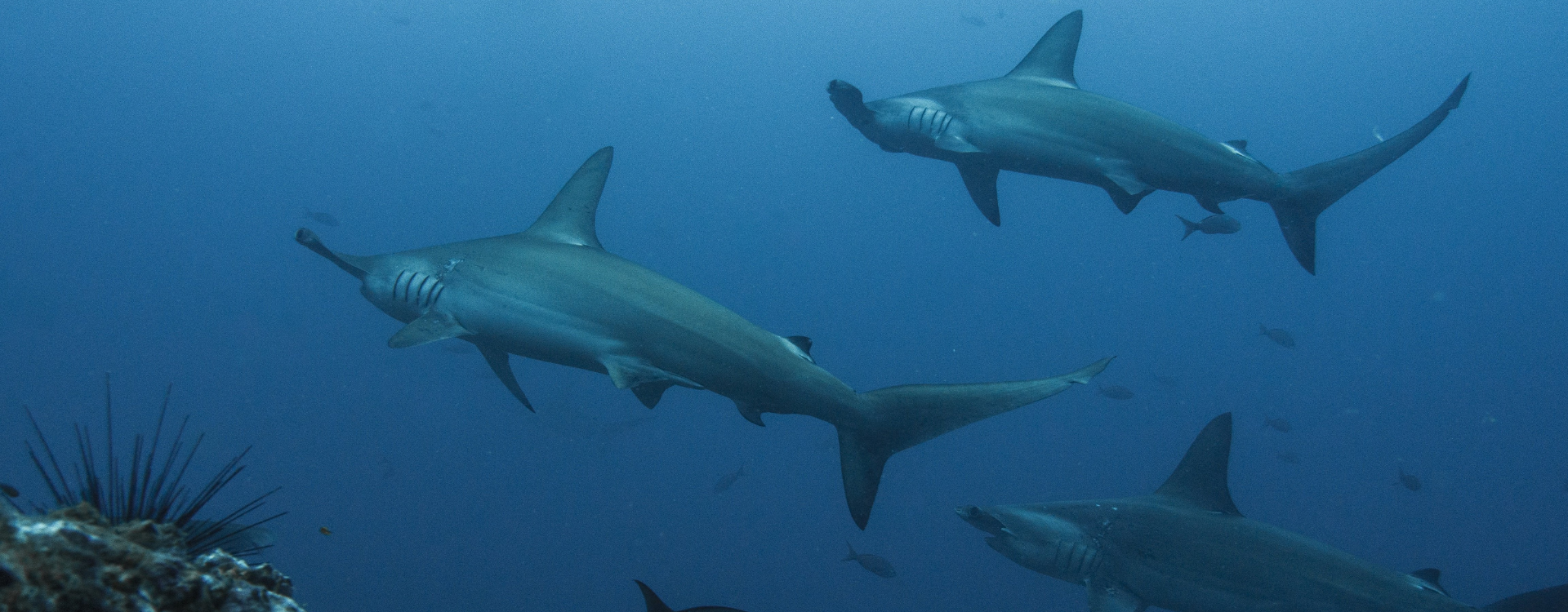
Thailand’s waters are home to some of the most fascinating marine life in Southeast Asia — and sharks are among the most iconic. From gentle giants like whale sharks to elegant reef species cruising the shallows, Thailand offers divers and snorkellers a chance to see these incredible animals in their natural habitat.
This guide explores the shark species found in Thai waters, where to see them, how to dive responsibly, and why conservation matters more than ever.
A Guide to Sharks in Thailand: Species, Diving, and Conservation
Sharks often get an unfair reputation, but in reality they are essential to healthy oceans. As apex predators, they help regulate marine ecosystems, maintain balance, and support biodiversity. Thailand is fortunate to host several shark species — some common, some rare, all worth protecting.
Shark Species in Thailand
Thailand’s shark population is diverse, though many species are now less common due to global pressures. Here are the sharks you’re most likely to encounter:
🐋 Whale Sharks (Rhincodon typus)
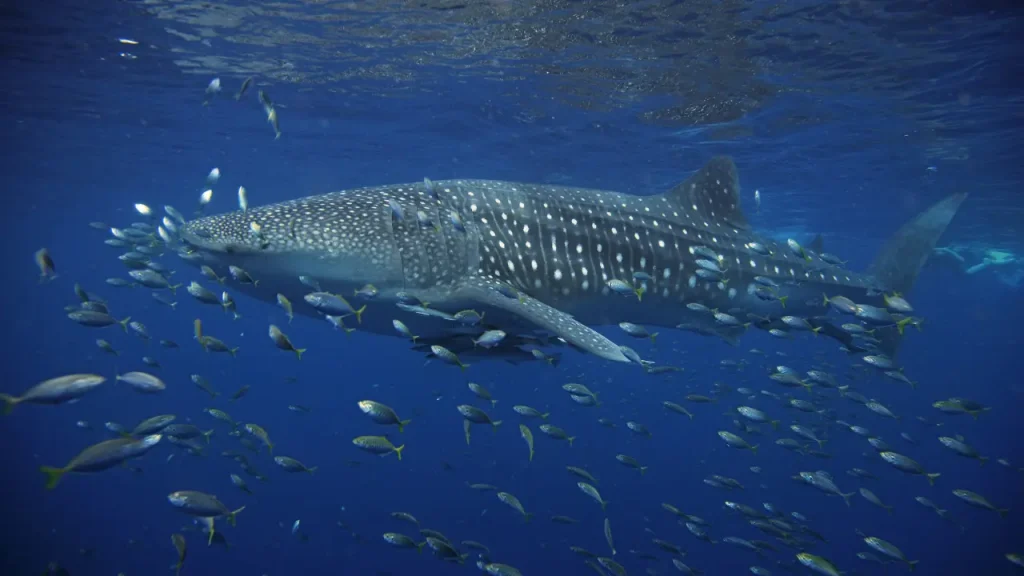
The world’s largest fish — and one of the gentlest.
Whale sharks are filter feeders, cruising slowly through the water while consuming plankton and small fish.
Where to see them:
- Richelieu Rock
- Similan Islands
- Koh Tao (seasonal)
Best time: February–May, though sightings can happen year‑round.
🦈 Blacktip Reef Sharks (Carcharhinus melanopterus)
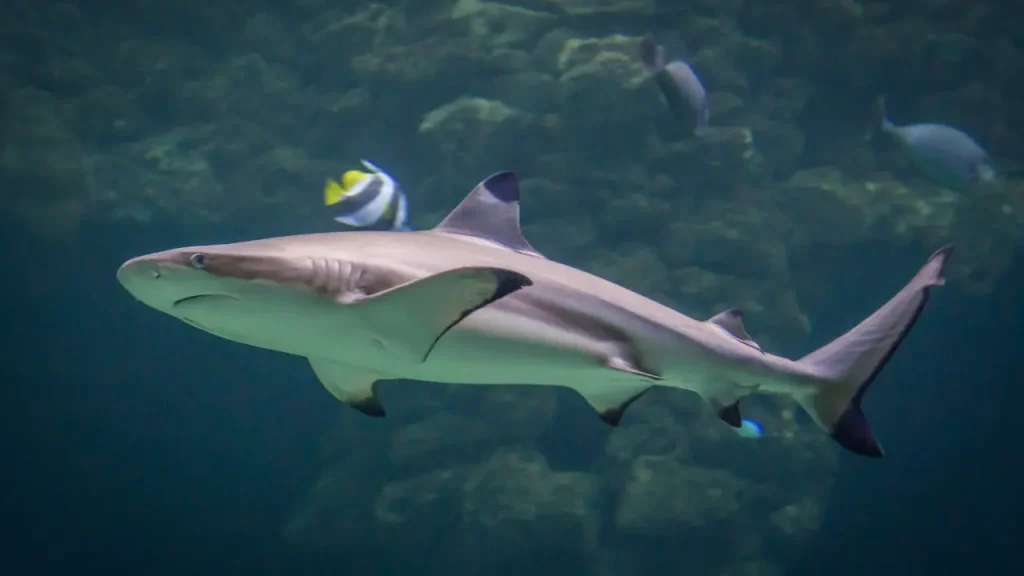
Common, sleek, and fast.
Blacktips are often seen patrolling shallow reefs and sandy bays.
Where to see them:
- Koh Phi Phi
- Similan Islands
- Koh Lanta
- Koh Tao
They’re shy around humans and usually dart away long before you get close.
🦈 Leopard Sharks (Stegostoma tigrinum)
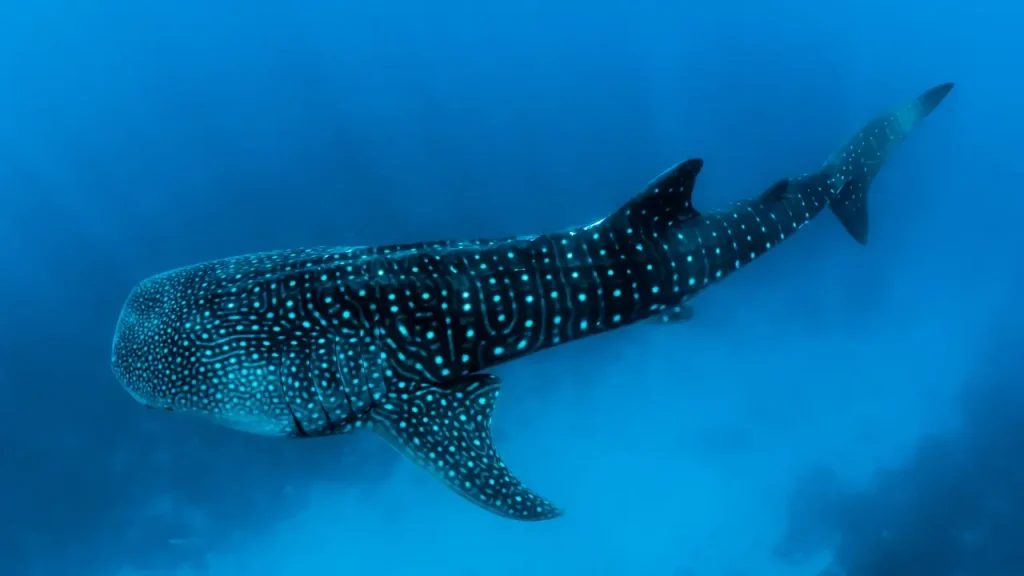
Despite the name, these are zebra sharks — but the “leopard” nickname stuck because adults have beautiful spotted patterns.
They’re slow, gentle, and often found resting on sandy bottoms.
Where to see them:
- Koh Phi Phi
- Koh Haa
- Koh Tao
A favourite among underwater photographers.
🦈 Nurse Sharks (Ginglymostoma cirratum)
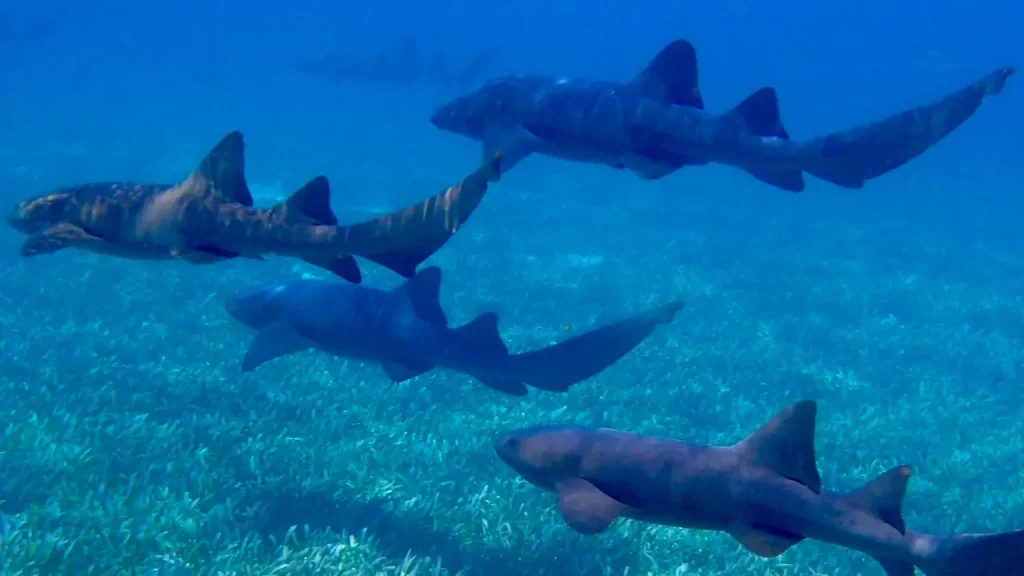
Docile, bottom‑dwelling sharks that spend much of the day resting.
They’re harmless unless provoked and are known for their calm behaviour.
Where to see them:
- Similan Islands
- Koh Tao
- Surin Islands
Shark Diving in Thailand
Thailand offers excellent shark‑diving opportunities for both beginners and experienced divers. While sightings are never guaranteed, certain locations are known hotspots.
🌊 Top Shark‑Diving Locations
1. Similan Islands
Crystal‑clear water, dramatic granite formations, and rich marine life.
Common sightings: leopard sharks, blacktips, whitetips, occasional whale sharks.
Best time: November–May.
2. Koh Phi Phi
A great place for beginners to see sharks in shallow water.
Common sightings: blacktip reef sharks, leopard sharks.
Best time: November–April.
3. Richelieu Rock
One of the best dive sites in the world — full stop.
Common sightings: whale sharks, leopard sharks, whitetips.
Best time: December–May.
🐠 Dive Operators & Courses
Most dive shops in Thailand offer:
- PADI Open Water
- Advanced Open Water
- Shark‑specialty dives
- Liveaboard trips (Similans, Surin, Richelieu Rock)
Choose operators that prioritise responsible shark tourism — no feeding, no touching, no harassment.
Shark Conservation in Thailand
Sharks worldwide face enormous pressure from:
- overfishing
- bycatch
- habitat loss
- pollution
- climate change
Thailand is no exception.
🚨 Key Threats
Overfishing
Sharks are targeted for meat and fins, and many species reproduce slowly — making recovery difficult.
Bycatch
Whale sharks and reef sharks are often caught unintentionally in nets.
Habitat Destruction
Coral reefs and mangroves — essential shark habitats — are threatened by development and warming seas.
🛡️ Conservation Efforts in Thailand
Several organisations are working to protect sharks:
- Marine Megafauna Foundation — whale shark research
- Shark Guardian — education, research, policy advocacy
- Thai government regulations — fishing restrictions in marine parks
Divers and travellers can support conservation by:
- choosing ethical dive operators
- avoiding shark products (especially shark fin)
- supporting marine‑protected areas
- reporting illegal fishing activity when appropriate
Shark Safety Tips for Swimmers and Divers
Shark encounters in Thailand are extremely rare — and sharks are not interested in humans as prey. Still, awareness and respect go a long way.
✔️ Do:
- Swim in clear water
- Stay in groups
- Keep movements calm and controlled
- Observe sharks from a respectful distance
- Follow your dive guide’s instructions
✘ Avoid:
- Swimming near fishing boats
- Wearing shiny jewellery
- Splashing excessively
- Swimming at dawn or dusk
- Approaching resting sharks
If you do see a shark, stay calm, maintain eye contact, and slowly back away.
Most sharks will simply glide past and continue on their way.
Conclusion
Sharks are an essential part of Thailand’s marine ecosystem — beautiful, misunderstood, and increasingly vulnerable. Seeing them in the wild is a privilege, and with responsible tourism and strong conservation efforts, Thailand can remain a safe haven for these remarkable animals.
By choosing ethical dive operators, supporting marine‑protected areas, and avoiding shark products, travellers can help ensure that future generations will still have the chance to encounter sharks in Thailand’s waters.
Protect the sharks, protect the ocean — it’s all connected.
You should also read:

Thailand: Navigating The Roads On The Left Side!
Thailand’s road network is one of the most developed in Southeast Asia, with highways, rural roads, toll expressways, and a surprisingly efficient system of bridges, tunnels, and bypasses connecting the country from Chiang Rai to the Malaysian border. Whether you’re renting a car, hopping on…
Continue reading...
Comments