The Flag Of Thailand

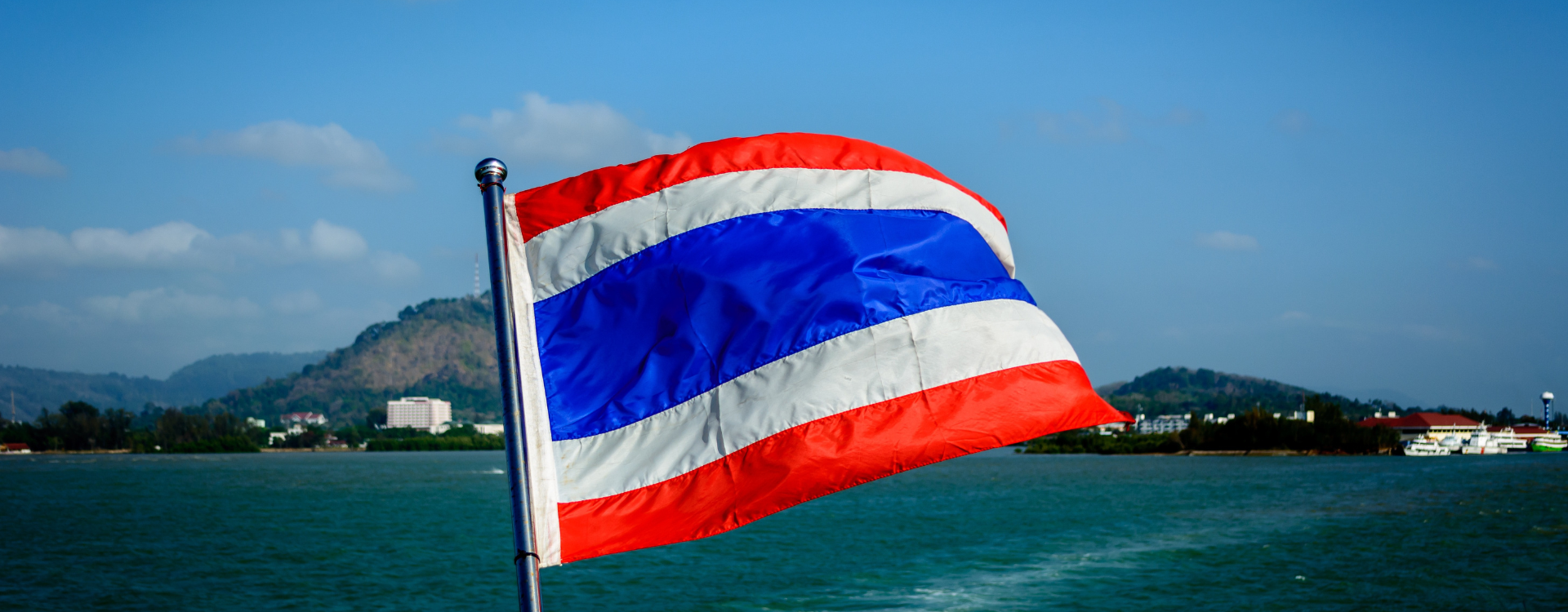
The Flag of Thailand — known locally as ธงไตรรงค์ (Thong Trairong), “the tricolour flag” — is one of the most recognisable national symbols in Southeast Asia. Its bold red‑white‑blue stripes are everywhere: temples, schools, government buildings, ferries, tuk‑tuks, and even the occasional soi dog’s collar. It’s a flag with history, symbolism, and a surprisingly modern origin story.
The Flag Of Thailand
The current design was officially adopted on 28 September 1917, but its roots stretch back through centuries of Siamese history. The story begins in the early 19th century, during the reign of King Rama IV (King Mongkut) — the same king who modernised Siam, embraced astronomy, and famously predicted a solar eclipse with pinpoint accuracy.
As part of his modernisation efforts, Mongkut introduced Western‑style naval and military uniforms featuring a red, white, and blue palette. These colours eventually inspired the tricolour flag Thailand uses today.
What the Colours Represent
The Thai flag’s five horizontal stripes carry deep cultural meaning:
- Red — the Thai people: strength, resilience, unity
- White — the monarchy: purity, stability, national identity
- Blue — Buddhism: the spiritual heart of the nation
Some interpretations flip the symbolism slightly (blue for the monarchy, white for religion), but the core idea remains the same: nation – religion – king, the three pillars of Thai identity.
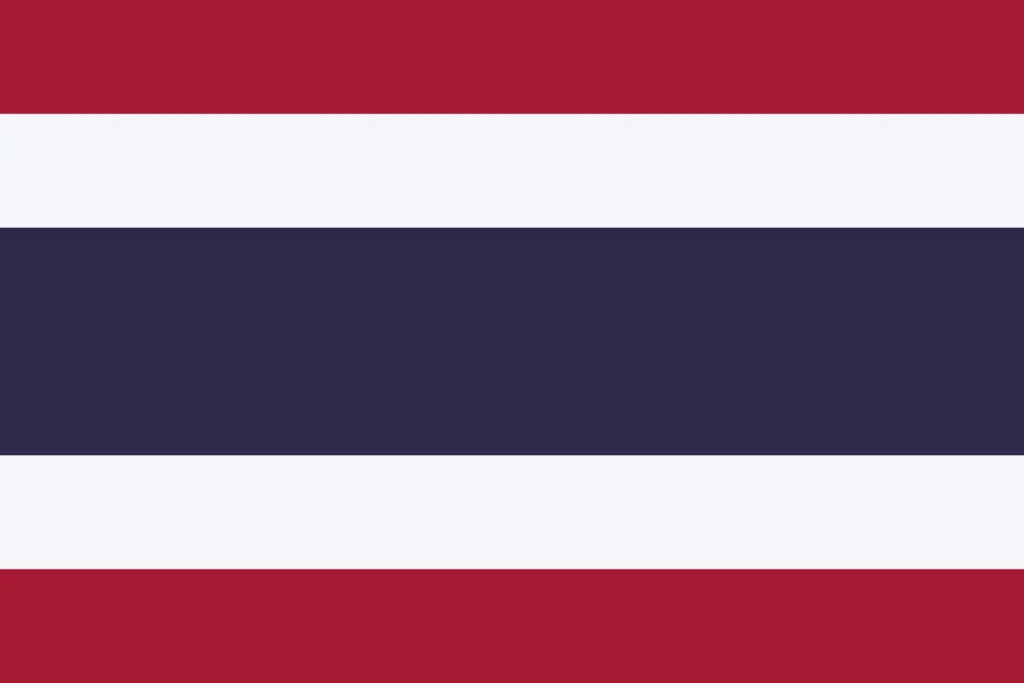
The flag is flown on government buildings, military bases, schools, and at major national events such as the King’s Birthday and the Royal Ploughing Ceremony. You’ll also see it proudly displayed on boats, cars, and even long‑tail river taxis.
A Brief History of the Thai Flag
Thailand’s flag didn’t always look like the bold tricolour we know today. Its evolution reflects the country’s shift from a traditional kingdom to a modern nation‑state.
1. The Solid Red Flag (17th–19th Century)
The earliest known flag of Siam was a simple solid red field, used during the late Ayutthaya and Thonburi periods. It served its purpose locally, but as international trade increased, it became clear that a plain red flag wasn’t distinctive enough for foreign ships.

2. The White Elephant on Red (1855–1916)
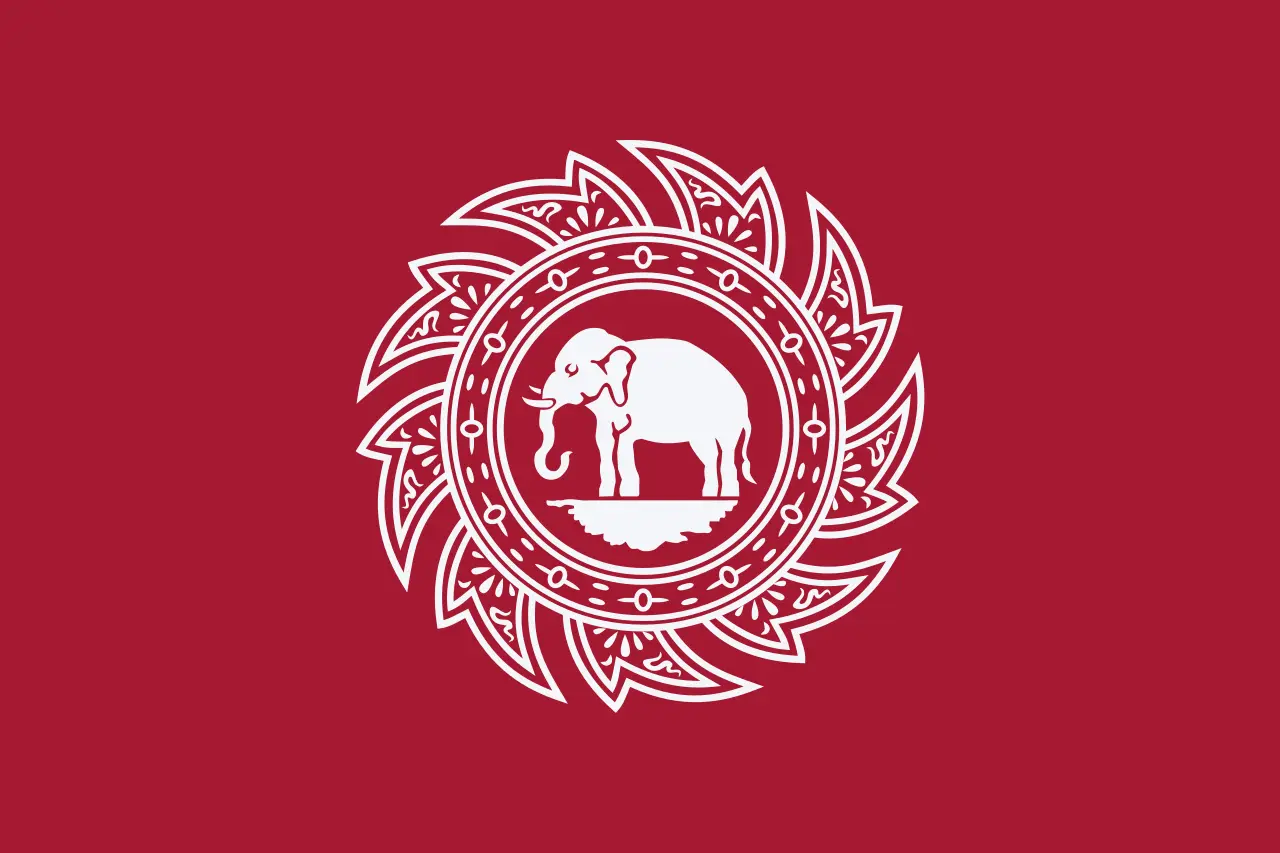
In 1855, King Mongkut introduced a new national flag:
a white elephant on a red background — a powerful royal symbol representing prosperity, legitimacy, and good fortune.
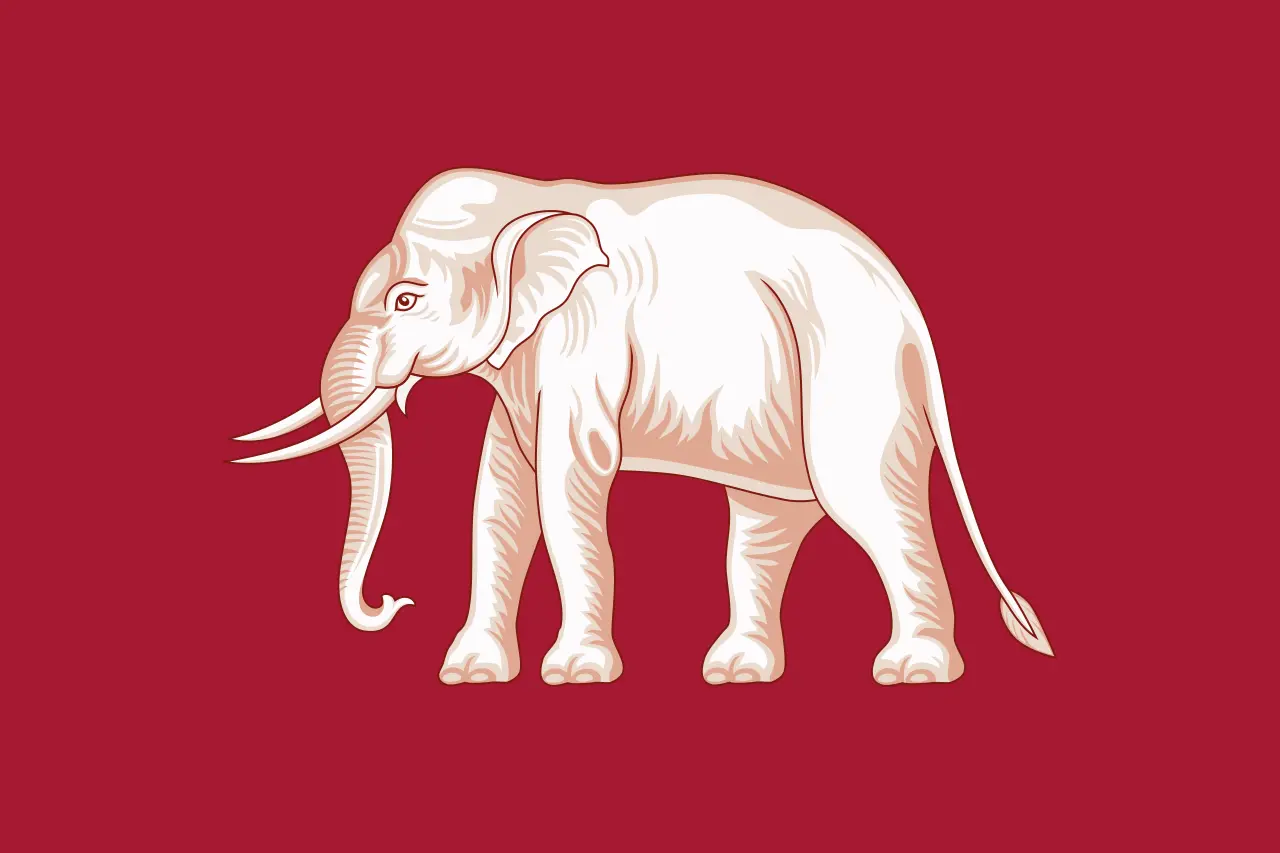
Later kings refined the elephant’s posture and regalia, but the core design remained the same for over 60 years.
3. The First Tricolour (1916)
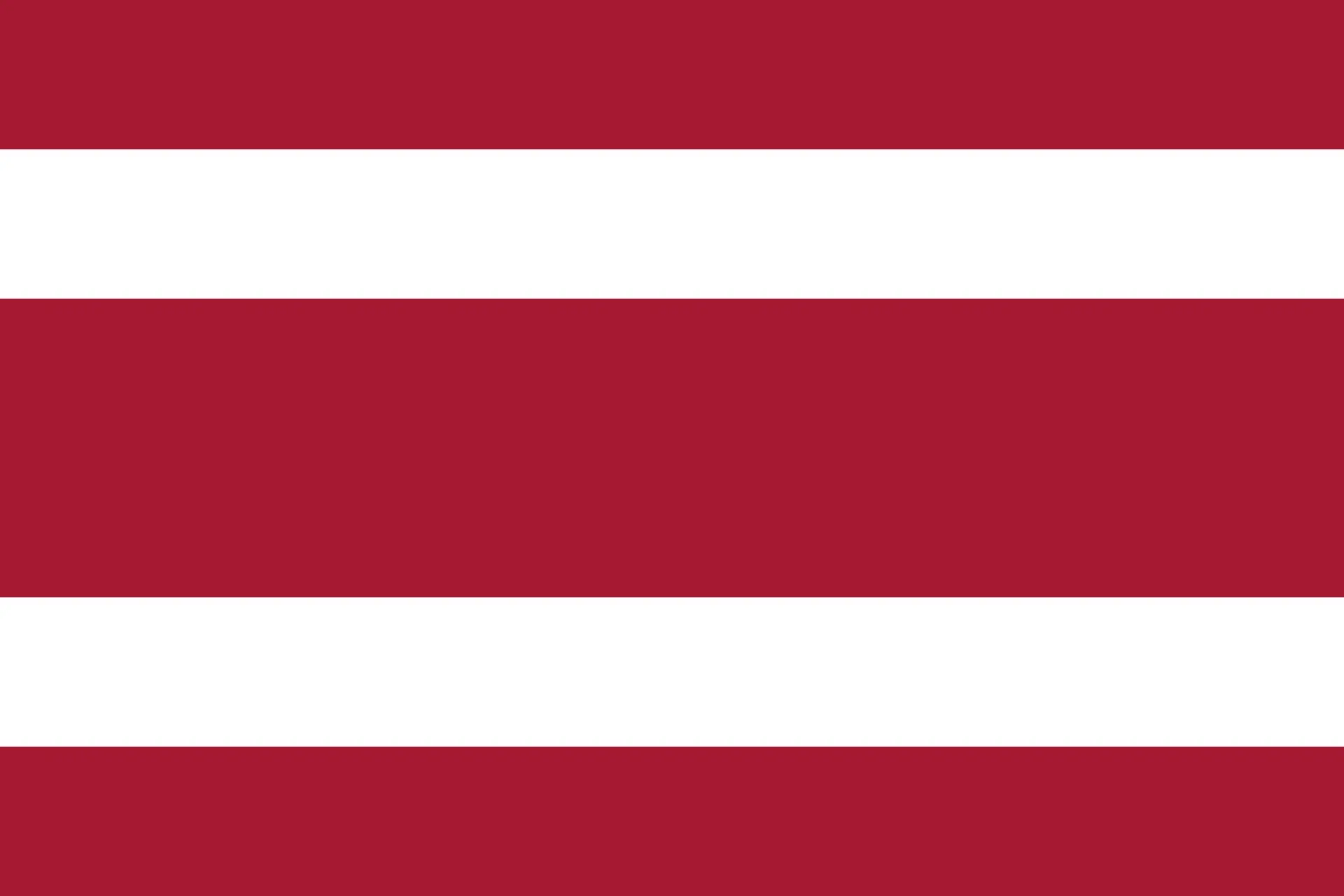
In 1916, King Vajiravudh (Rama VI) introduced a new civil ensign:
a red–white–red horizontal tricolour.
According to legend, the king saw the elephant flag hanging upside‑down during a flood and decided the nation needed a symmetrical design that couldn’t be displayed incorrectly.
4. The Modern Flag (1917–Present)
Just one year later, the central red stripe was replaced with blue, creating the modern five‑stripe flag:
red – white – blue – white – red
Why blue? Two reasons often cited:
- It matched the auspicious colour for Saturday, the king’s birthday
- It aligned Thailand with the Allied powers during World War I, whose flags also used red‑white‑blue
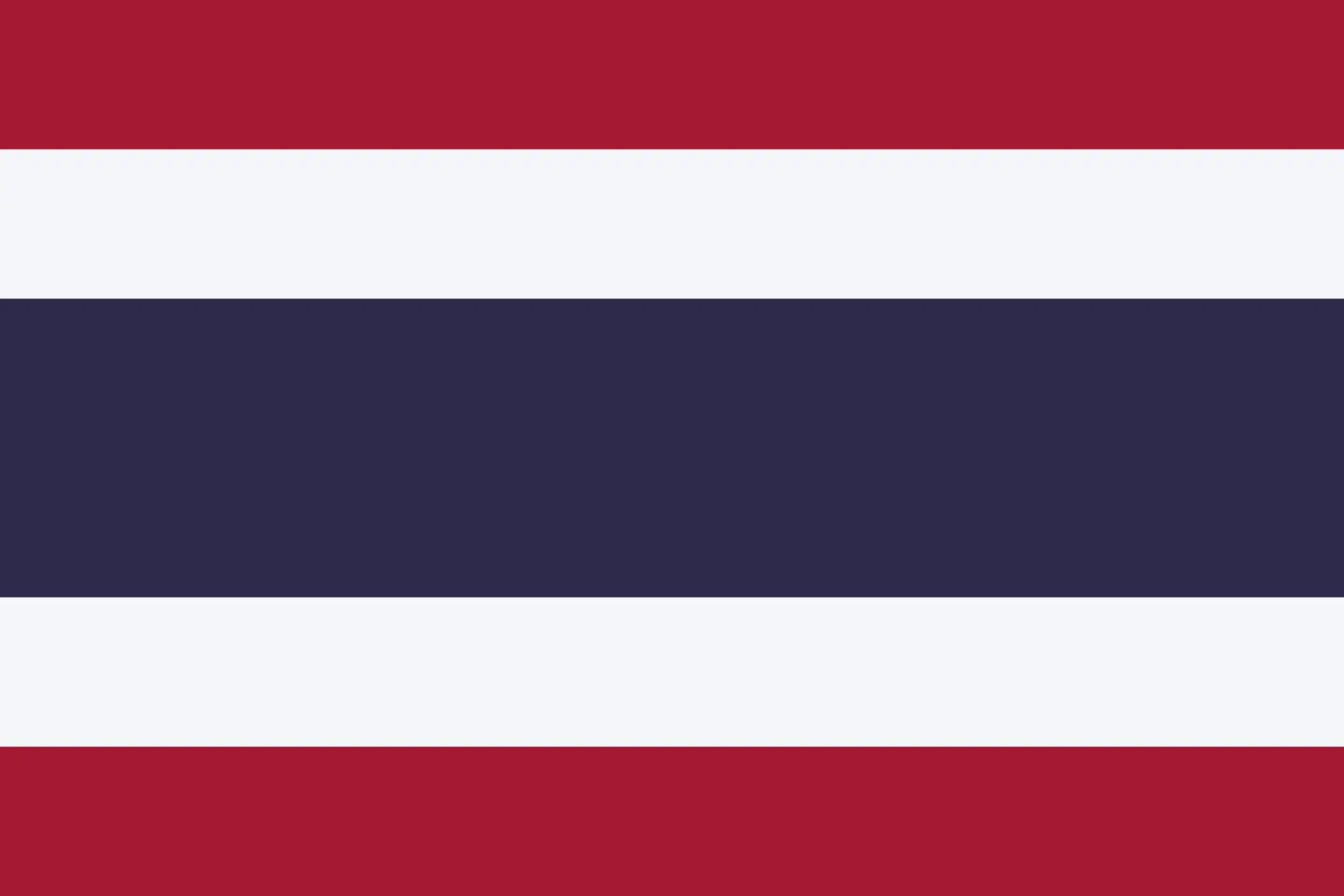
This is the flag Thailand still uses today — bold, balanced, and instantly recognisable.
🇹🇭 Flag Etiquette in Thailand
Thailand treats its national flag with deep respect, and there are a few cultural norms worth knowing — especially if you’re living in or travelling through the country.
General Etiquette
- The flag is raised at 8:00 AM and lowered at 6:00 PM on government buildings.
- During raising/lowering ceremonies, people stop walking and stand still.
- The flag must never touch the ground.
- Damaged or faded flags should be replaced immediately.
- The flag is flown at half‑mast during national mourning periods.
Where You’ll Commonly See It
- Schools (students often sing the national anthem during flag‑raising)
- Government offices
- Military bases
- Police stations
- Temples
- Boats and ferries
- Homes and businesses on important holidays
What Not to Do
- Don’t use the flag as clothing or decoration.
- Don’t print it on disposable items.
- Don’t step on or sit on anything featuring the flag.
Thais don’t expect foreigners to know every detail, but showing respect goes a long way.
🎨 Colour Breakdown (HEX Codes for Designers)
If you’re designing anything involving the Thai flag — graphics, print, branding, or digital layouts — these colour values will keep things accurate and consistent.
| Stripe | HEX | Notes |
|---|---|---|
| Red | #A51931 | Deep, rich red used in national branding |
| White | #FFFFFF | Pure white |
| Blue | #2D2A4A | Dark indigo‑blue, the widest stripe |
These values are widely accepted in design circles and match the modern flag’s official tones.
🖼 Mini Gallery of Historical Flags
A quick visual tour through the evolution of the Thai flag:
Solid Red Flag (Ayutthaya & Thonburi Periods)
White Elephant on Red (Rama I–V)
Refined Elephant Design (Rama II–V)
Early Tricolour (1916)
Modern Tricolour (1917–Present)
🚩 The Royal Standard of Thailand
Thailand also has a Royal Standard — a personal flag used exclusively to represent the King. It is flown when the monarch is present at a location, travelling in a vehicle, or attending a ceremony.
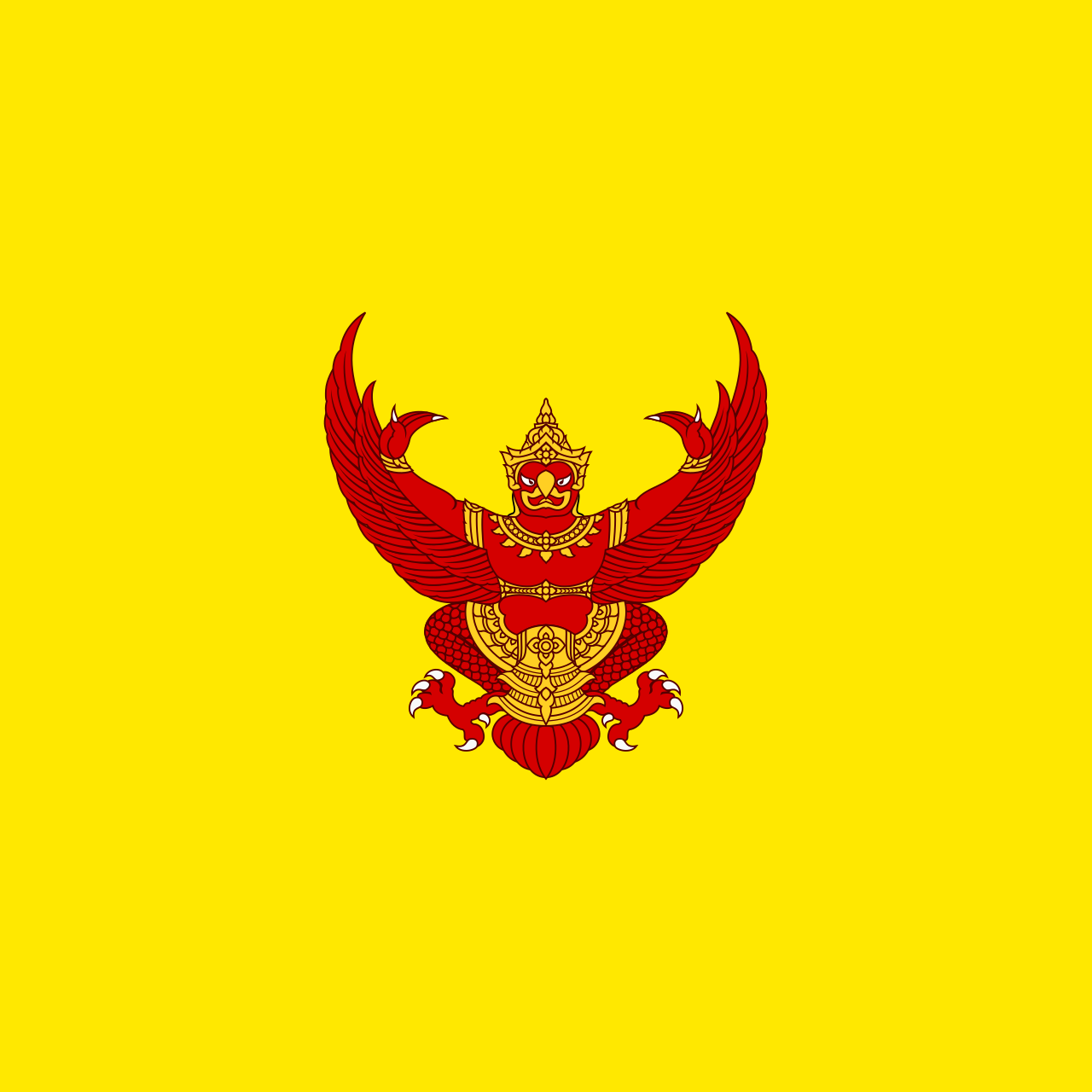
Current Royal Standard (King Rama X)
- A yellow field (yellow = Monday, the King’s birthday colour)
- Royal Garuda in the center
Where You’ll See It
- On royal motorcades
- At royal residences
- On government buildings during royal visits
- At major state ceremonies
It is treated with even greater respect than the national flag.
Maritime Flags of Thailand
Thailand’s naval flags retain strong links to the country’s royal symbolism.
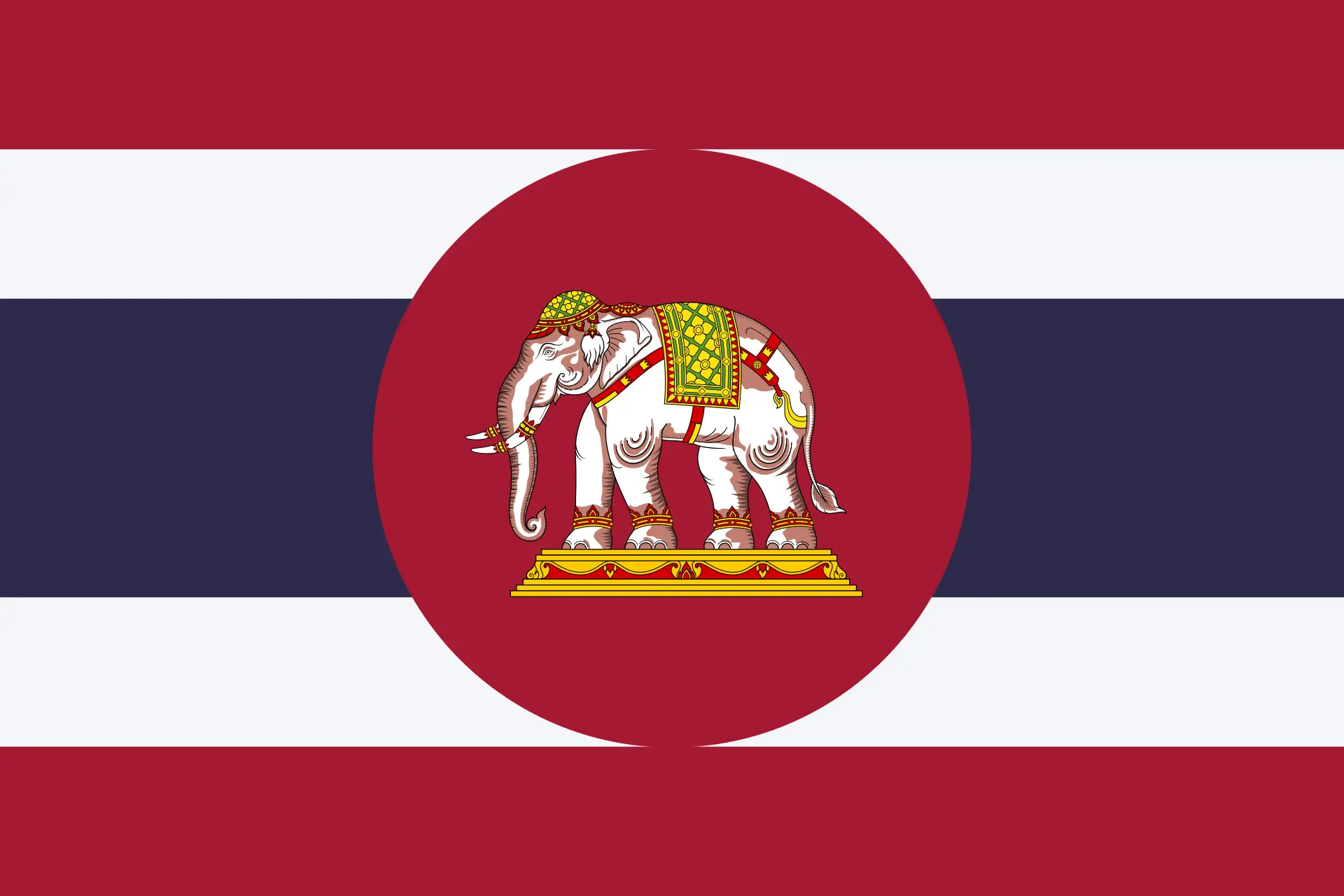
Royal Thai Navy Ensign
The national flag with a red circle containing a white elephant facing the hoist.
Naval Jack of Thailand
The national flag with the Royal Thai Navy emblem at the centre.
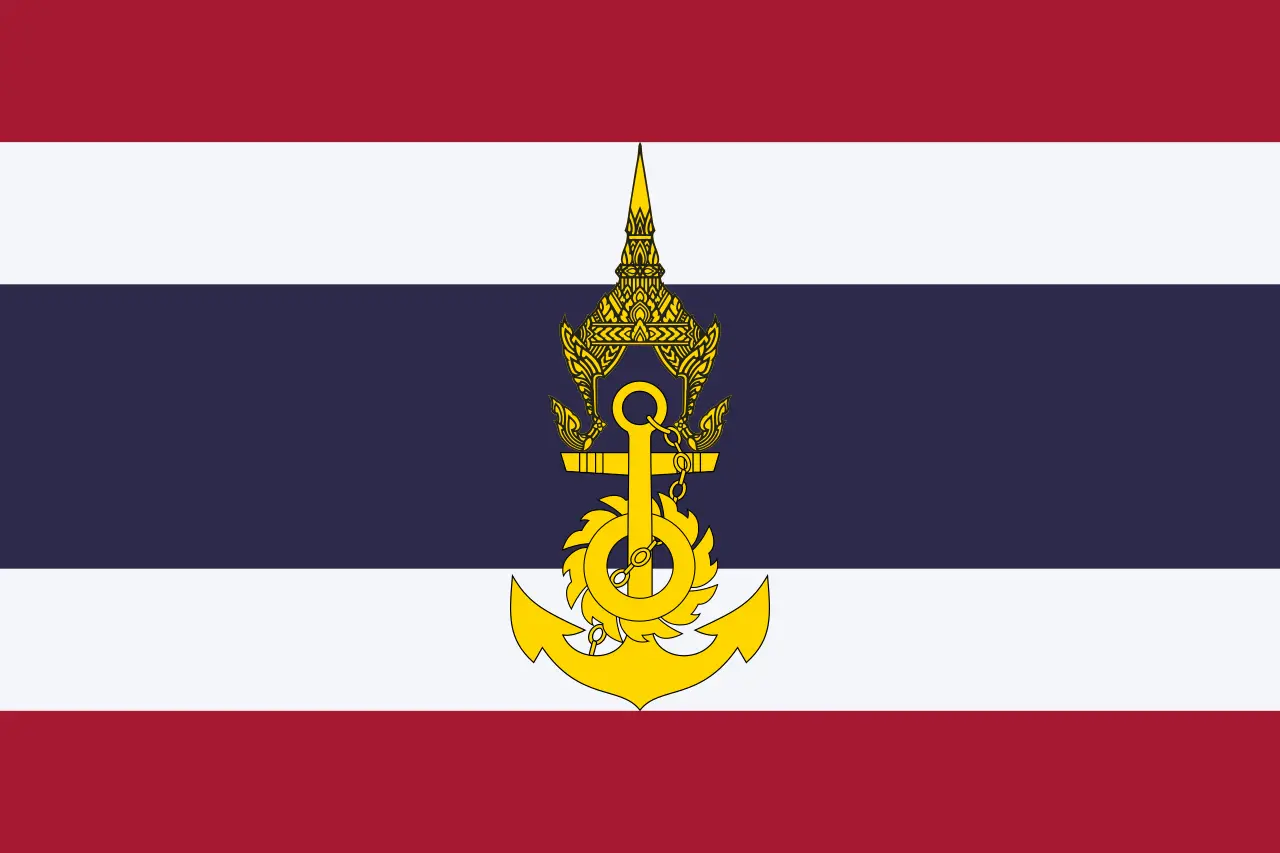
Both designs were adopted in 1917, the same year the modern tricolour became official.
🎬 Videos About the Thailand
Thai National Anthem
History Of Thailand
Conclusion – The Flag of Thailand
The Flag of Thailand is far more than a patriotic decoration. It’s a visual summary of the nation’s identity: its people, its monarchy, and its deep connection to Buddhism. From the early red banners of Ayutthaya to the modern tricolour flying across the country today, the flag tells a story of resilience, adaptation, and national pride.
Whether you’re travelling through Thailand, learning the language, or simply curious about its culture, understanding the flag gives you a window into the heart of the Thai nation.
You should also read:

Does It Snow In Thailand?
As it’s coming to the end of the year and I’m back home in England for the winter, a question that always comes up is: does it snow in Thailand? Thailand is a tropical country, but it does have cooler months — especially in the…
Continue reading...
Drones in Thailand
Drones in Thailand - Updated Guide (CAAT + NBTC) Flying a drone in Thailand is perfectly legal, but the rules are strict — and they apply to tourists just as much as locals. There’s a lot of outdated information online, so this guide breaks down…
Continue reading...
Movies Shot In Thailand
Movies Shot in Thailand With the new Fast and Furious movie being filmed in Thailand, I thought it was the perfect time to put together a list of movies shot in Thailand. These are films I’ve watched, enjoyed, and think are worth checking out. Thailand…
Continue reading...
Comments