Thailand's Most Bizarre Statue Park: Sala Keo Kou, Nong Khai

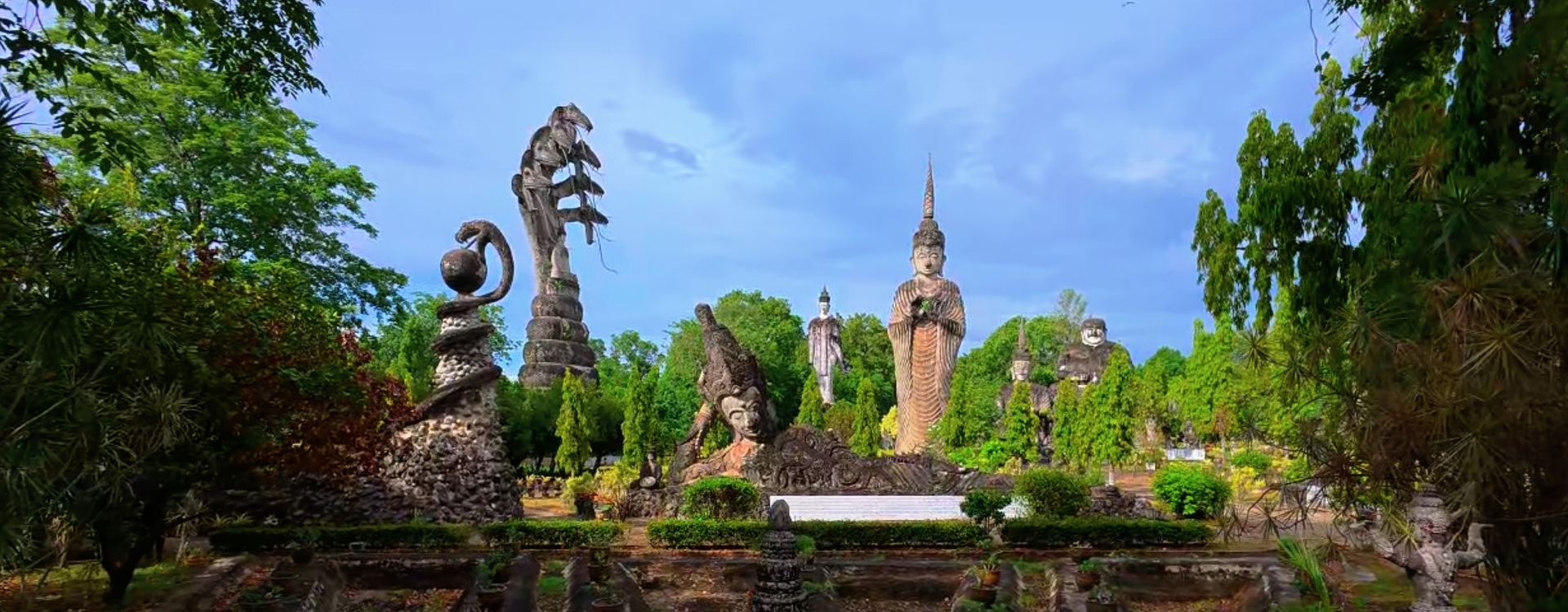
There are plenty of unusual places to visit in Thailand, but Sala Keo Kou in Nong Khai has to be somewhere near the top of the list.
Hidden away just outside Nong Khai in northeastern Thailand, Sala Keo Kou - also written as Sala Keoku, Sala Kaew Ku or Sala Kaeo Ku - is a huge sculpture park filled with enormous concrete figures inspired by Buddhism, Hinduism and the rather unique imagination of the man who created it.
And when I say enormous, bizarre and unusual, I really do mean it.
So naturally, I took the camera along.
Sala Keo Kou - Nong Khai’s bizarre sculpture park
Sala Keo Kou is sometimes referred to locally as Wat Khaek, and it certainly isn’t your typical Thai temple.
Instead of the familiar rows of golden Buddha images and ornate temple buildings, you find yourself wandering through a landscape filled with giant concrete gods, demons, animals, mythical creatures and strange combinations of all of them.
Some of the sculptures tower more than 20 metres above you.
The largest and most recognisable is a huge Buddha sitting beneath a spectacular seven-headed naga, while elsewhere in the park you’ll find Hindu deities, Buddhist figures and all manner of bizarre human and animal forms.
It’s one of those places where you can walk around a corner and have absolutely no idea what you’re going to see next.
Who built Sala Keo Kou?
The story behind the park is almost as fascinating as the sculptures themselves.
Sala Keo Kou was the creation of Luang Pu Bunleua Sulilat, a mystic, spiritual teacher and sculptor whose work crossed traditional boundaries between Buddhism and Hinduism.
Before creating Sala Keo Kou in Thailand, Bunleua Sulilat had created a similar sculpture park across the Mekong near Vientiane, Laos. That park is now known as Buddha Park, or Xieng Khuan.
After the political upheaval in Laos in the 1970s, Sulilat crossed the Mekong into Thailand and began work on Sala Keo Kou in Nong Khai in 1978. Construction continued for many years, eventually producing the extraordinary collection of sculptures that can be seen today.
Rather than being the work of a conventional temple or a large organisation, the park was very much the expression of one man’s personal religious and artistic vision.
And that probably explains why it feels so different from almost anywhere else in Thailand.
Buddhism, Hinduism and something completely different
One of the fascinating things about Sala Keo Kou is that the sculptures don’t fit neatly into one religious tradition.
Buddhist and Hindu imagery sits alongside local legends, mythical creatures and figures that seem to have come straight from Sulilat’s own imagination.
The official Tourism Authority of Thailand’s guide to Nong Khai describes the park as featuring Buddha images alongside Brahmin and Hindu deities, scenes from the Ramayana and characters from local folklore.
It’s this mixture that gives the park its distinctive appearance.
You might be looking at a familiar religious figure one moment and then find yourself staring at something that looks like it belongs in a fantasy film the next.
And that’s what makes Sala Keo Kou so much fun to explore.
The giant seven-headed naga
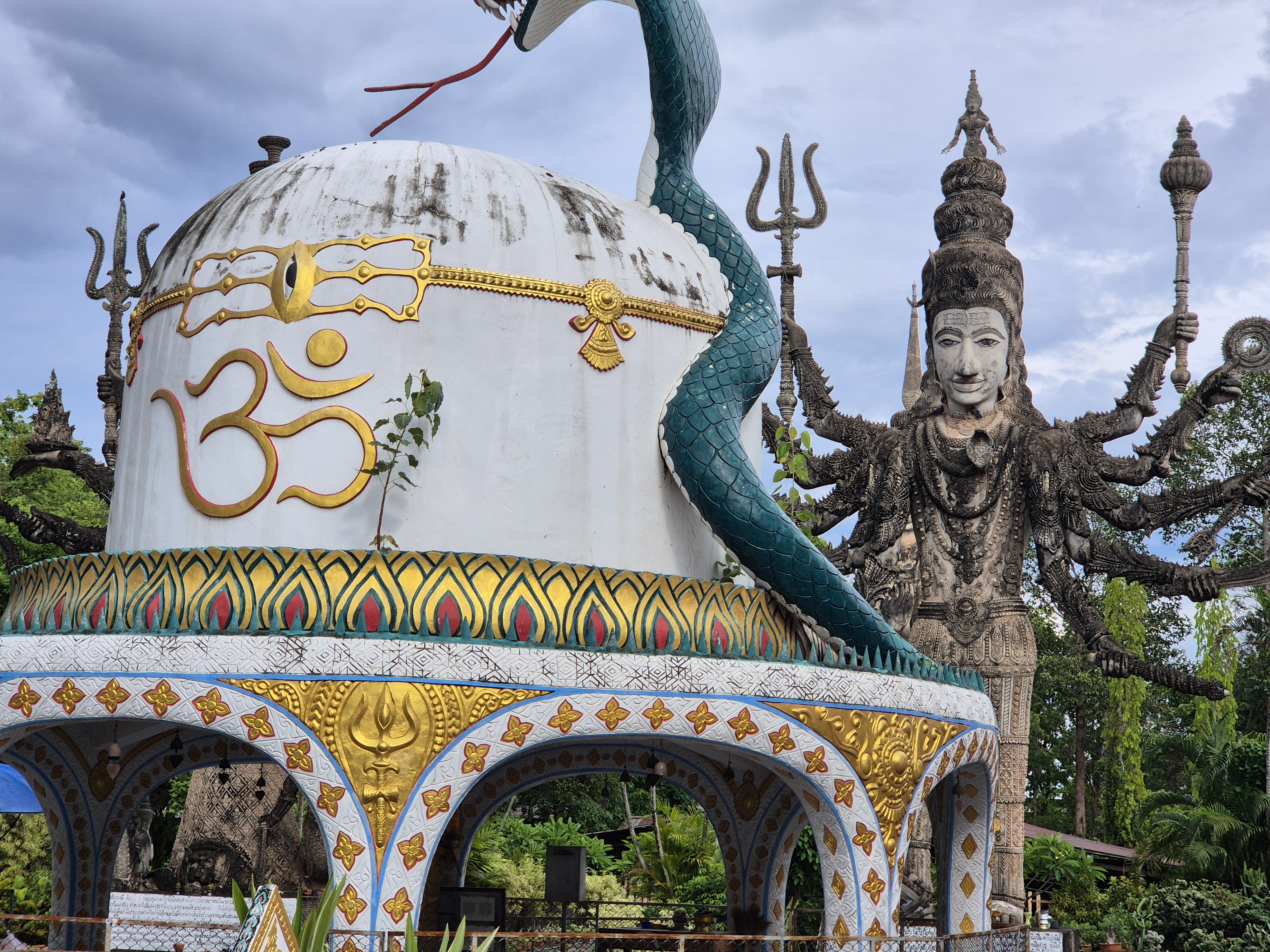
One of the first sculptures you’re likely to notice is the enormous Buddha sitting beneath a seven-headed naga.
It’s difficult to appreciate the scale of it from photographs.
The sculpture reaches around 25 metres high, making it one of the most imposing structures in the park.
The naga itself is particularly impressive, with its seven heads spreading out behind the Buddha.
Naga are an important part of Buddhist and Hindu traditions throughout this part of Southeast Asia, and they’re a recurring feature of religious art around Thailand and Laos.
But Sulilat’s version is on a completely different scale.
It’s the sort of sculpture that makes you stop, look up and think:
“Yep… that’s pretty big.”
The Wheel of Life
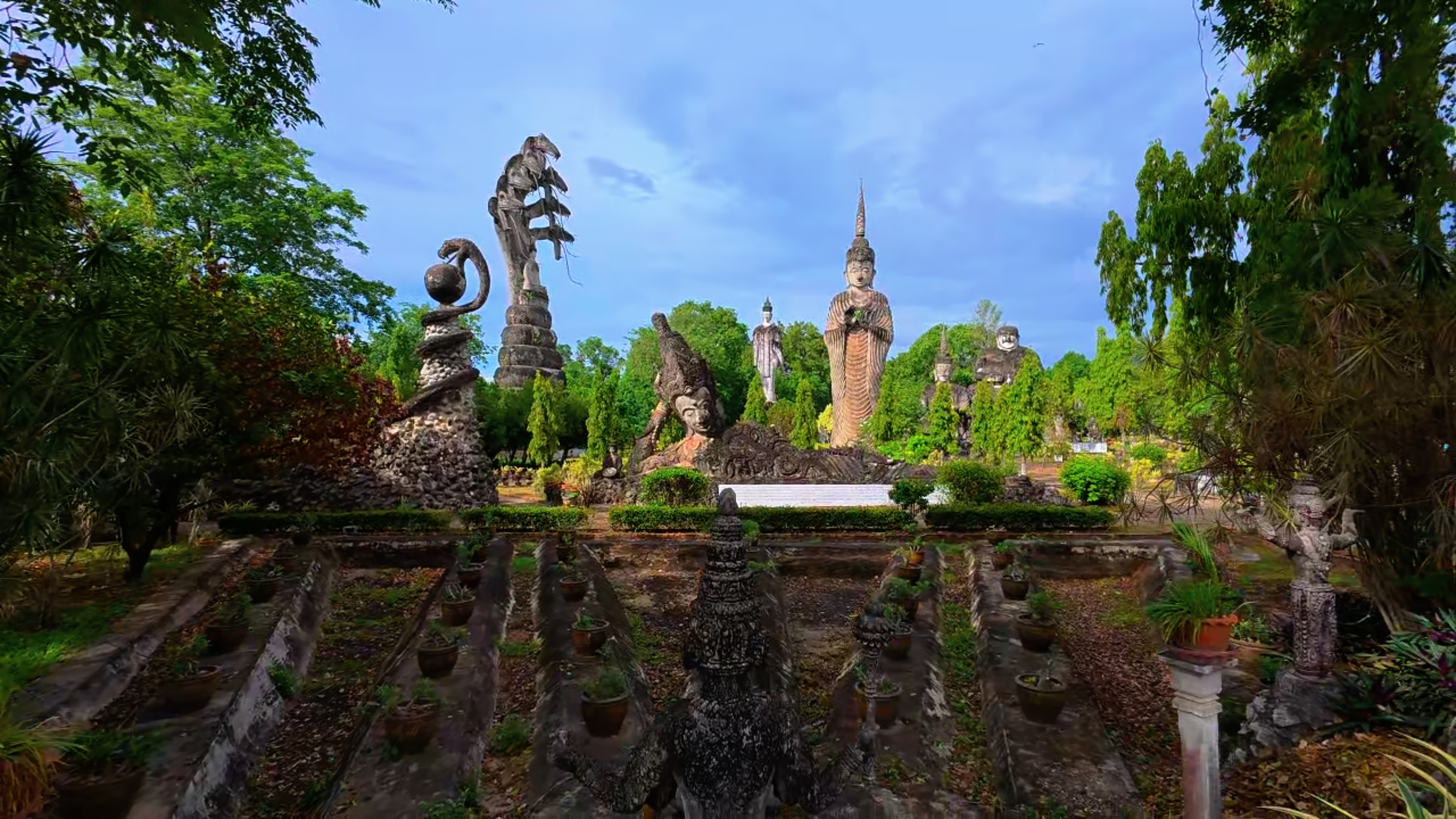
Another particularly interesting part of Sala Keo Kou is the Wheel of Life.
This is much more than just another collection of strange statues.
The circular sculpture represents the cycle of human existence - from birth through life and death, and ultimately towards enlightenment.
The scene contains a progression of figures representing different stages and aspects of existence. At the end, a young man steps beyond the enclosure and becomes a Buddha.
It’s one of the clearest examples of how the park isn’t simply a collection of random weird sculptures.
There is a philosophy behind it.
Sulilat used the sculptures to express his own interpretation of spiritual ideas, combining elements from different religious traditions into something distinctly his own.
Why does Sala Keo Kou look so strange?
That’s probably the question you’ll ask while walking around.
And the answer is essentially because it was never intended to look like a conventional temple.
Sulilat’s sculptures are monumental, imaginative and often surreal.
They’re made from concrete, rather than the polished stone, bronze or gold you might expect from traditional religious sculpture.
The scale is exaggerated.
The figures are sometimes grotesque.
And there are plenty of combinations of humans, animals, gods and mythical creatures that you probably won’t find anywhere else.
The result is something that sits somewhere between a religious site, sculpture garden, fantasy landscape and the work of an outsider artist.
It’s wonderfully strange.
Sala Keo Kou today
Bunleua Sulilat died in 1996, but his influence remains throughout the park.
His preserved body is kept inside the three-storey pavilion at Sala Keo Kou, where visitors can learn more about his life and beliefs. The building contains photographs and other material relating to the founder and the history of the park.
So while the giant sculptures are the obvious attraction, there’s more to Sala Keo Kou than simply wandering around taking photographs of enormous concrete monsters.
The park is really a reflection of the person who created it.
And the more you learn about Sulilat, the more the strange collection of sculptures starts to make sense.
Visiting Sala Keo Kou in Nong Khai
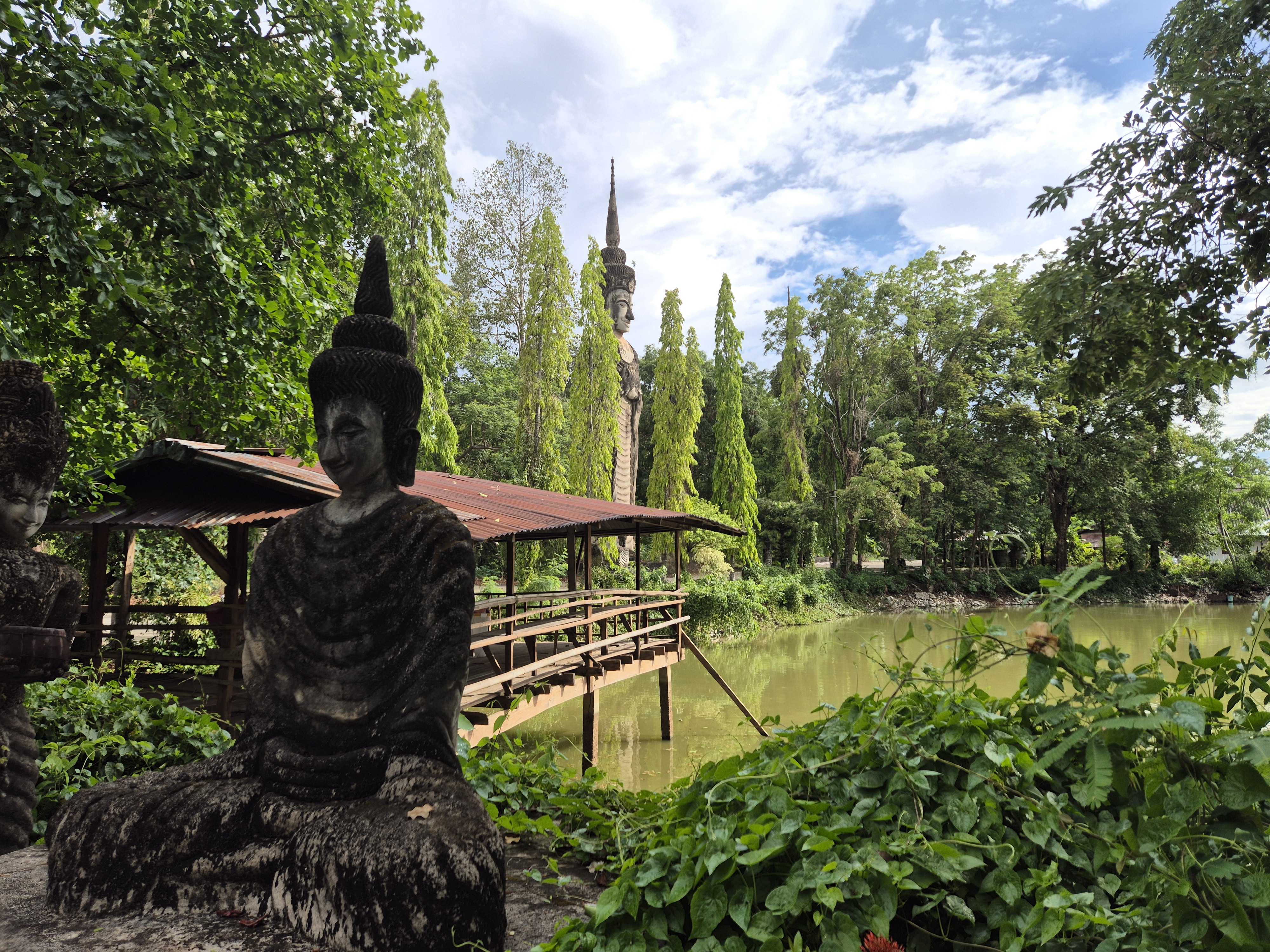
Sala Keo Kou is located a few kilometres outside Nong Khai, in northeastern Thailand.
Nong Khai itself sits on the banks of the Mekong, directly opposite Laos, and is one of the main gateways between Thailand and Vientiane. The province is known for its Mekong scenery, temples, local culture and unusual attractions.
That makes Sala Keo Kou an easy addition to a trip around Nong Khai.
It’s also one of those attractions that doesn’t require you to spend an entire day there.
You can wander around the sculpture park, take in the main statues, explore the pavilion and then continue exploring Nong Khai and the Mekong.
Current visitor information lists the park as open daily, although opening times and admission prices can change, so it’s worth checking locally before making a special trip.
Is Sala Keo Kou worth visiting?
Absolutely.
Especially if you like visiting places that are a little different.
If you’re expecting a traditional Thai temple, Sala Keo Kou might leave you slightly confused.
If you’re looking for somewhere unusual, visually spectacular and unlike the standard tourist attractions, it’s brilliant.
It’s also a photographer’s dream.
There are huge sculptures everywhere, strange details to discover, interesting compositions and plenty of opportunities to capture something that doesn’t look quite like anywhere else in Thailand.
And even if you’re not particularly interested in religious art, the sheer scale and weirdness of the place make it worth seeing.
My visit to Sala Keo Kou
This is one of those places that’s difficult to explain properly with words.
You can describe the sculptures.
You can explain the history.
You can tell someone that there are enormous concrete figures inspired by Buddhism and Hinduism.
But then you actually see the place.
And it’s… bizarre.
In the best possible way.
So rather than trying to explain every strange sculpture in the park, I took the camera with me and filmed the visit.
Watch the video
Sala Keo Kou, Nong Khai - a very strange corner of Thailand
I’ve visited plenty of temples and attractions around Thailand, but Sala Keo Kou is definitely one that sticks in the memory.
It’s not polished.
It’s not conventional.
And it’s certainly not boring.
It’s a strange mixture of religion, mythology, sculpture and one man’s incredibly ambitious vision.
And that’s exactly why I liked it.
If you’re travelling through Nong Khai or northeastern Thailand, I’d definitely put Sala Keo Kou on the list.
You might not understand everything you’re looking at.
You might find some of it slightly creepy.
You might find some of it fascinating.
You might find some of it completely bonkers.
But I reckon you’ll remember it.
Sala Keo Kou - Quick Facts
Name: Sala Keo Kou / Sala Keoku / Sala Kaew Ku Thai: ศาลาแก้วกู่ Also known as: Wat Khaek Location: Nong Khai, northeastern Thailand Known for: Giant concrete Buddhist, Hindu and mythological sculptures Creator: Luang Pu Bunleua Sulilat Construction began: 1978 Highlight: Giant seven-headed naga and Buddha Other highlight: Wheel of Life Nearby: Mekong River and the Thai-Lao border
Comments