Conington's Haunted Crossing: Ghostly Tales from Cambridgeshire


There are plenty of supposedly haunted places around Britain, but Conington Level Crossing in Cambridgeshire has a particularly eerie reputation.
Known locally and in paranormal folklore as “The Crossing of Death”, this remote railway crossing near Peterborough has been associated with a number of tragic accidents and some very strange stories.
There’s supposedly a phantom black car.
There have been reports of mysterious sounds and gates apparently moving by themselves.
And according to the stories, the ghost of a man killed at the crossing in 1948 may still return to the scene of the accident.
Naturally, I had to go and have a look.
Watch the video
Where is Conington Level Crossing?
Conington Level Crossing is in the Cambridgeshire countryside near Holme, south of Peterborough.
It’s not the sort of place you’d necessarily stumble across while sightseeing.
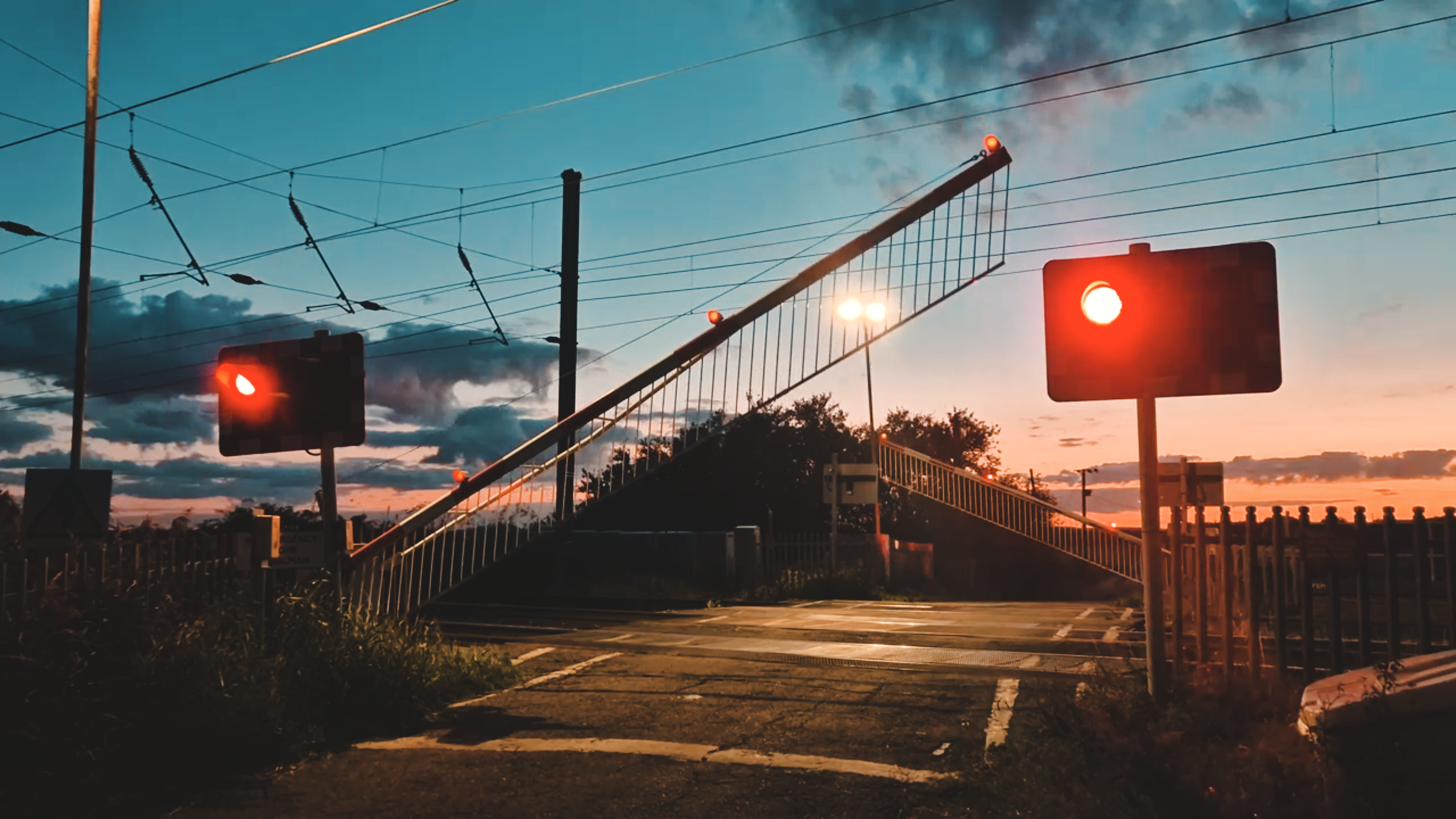
The crossing sits in a relatively remote area of Conington Fen, surrounded by farmland and open countryside, with the East Coast Main Line running through the landscape.
And that’s part of what makes the location so atmospheric.
There aren’t rows of houses or a busy high street nearby.
Just the railway, the road, fields and the sound of trains passing through.
Photographs of the crossing taken over the years capture just how isolated it can feel, particularly around dusk. The location has long been described as atmospheric and has gained a reputation as one of Britain’s most haunted railway crossings.
Why is Conington Crossing haunted?
The reputation of Conington Level Crossing is closely connected to a series of tragic accidents, particularly during the 1940s.
One of the most frequently mentioned incidents occurred in 1948, when a railway engine collided with a lorry carrying German prisoners of war.
Six of the prisoners were killed.
Later that same year, another tragedy occurred.
Colonel A. H. Mellows was driving across the crossing when his car was struck by a London-bound express train. Mellows and his dog were killed in the collision. Contemporary accounts and later paranormal literature have connected these deaths with the ghost stories that subsequently became associated with the crossing.
Two tragic accidents in the same year, at a remote railway crossing, were more than enough to give Conington a dark reputation.
But the ghost stories were only just beginning.
The ghost of Colonel Mellows
The most famous story concerns Colonel Mellows.
According to the legend, his spirit is still connected with the crossing where he died.
One version of the story says that a black car has been seen approaching the crossing, apparently waiting for the gates to open.
The strange part?
When somebody goes to investigate, the car disappears.
Reports of a phantom black car were apparently made by railway signalmen, who described seeing a large black vehicle waiting to cross before it vanished. Some accounts have identified it as the black Chrysler associated with Colonel Mellows’ fatal accident.
The story has subsequently become one of the defining pieces of Conington’s haunted reputation.
The phantom car
The black car is perhaps the most intriguing of the Conington stories.
Imagine working a railway signal box on a dark night.
The crossing is quiet.
The railway stretches away into the darkness.
Then you notice a large black car waiting on the other side.
You go to open the gates.
And it’s gone.
That’s reportedly what happened to some of the signalmen who worked in the area.
Other stories describe hearing the sound of a car approaching or tyres moving over the gravel, only for there to be no vehicle when the area was checked.
The accounts are part of the folklore surrounding Conington rather than something that can be independently verified today.
But they certainly make for a good ghost story.
The ghosts of the German prisoners
Colonel Mellows isn’t the only supposed haunting associated with the crossing.
The six German prisoners of war who died in the earlier 1948 accident have also become part of the area’s paranormal folklore.
Some accounts suggest that unexplained voices and other strange activity around the crossing could be connected to the men who died there.
Exactly what happened during the accident and the circumstances surrounding it have been discussed in various historical and paranormal accounts, but the deaths themselves are well documented.
The ghost stories that developed afterwards are considerably harder to establish.
And that’s where Conington becomes particularly interesting.
It’s a real historical location with real tragedies at its centre - and over the years, those events have accumulated layers of folklore.
Why was the crossing so dangerous?
There’s another reason Conington developed such a grim reputation.
Historically, the crossing was manually operated, meaning road users had to open and close the gates themselves.
That was particularly dangerous given the speed and frequency of trains using the railway.
Historical accounts describe numerous close calls and accidents at the crossing, with users sometimes failing to take sufficient care when crossing the tracks.
Eventually, changes were made to improve safety.
The crossing was incorporated into a more modern signalling system, and by the 1970s the old local signal box had been removed as railway signalling was modernised.
Today, the crossing is considerably different from the one that existed during the 1940s.
But the stories have survived.
The Crossing of Death
The nickname “The Crossing of Death” sounds like something invented specifically for a horror film.
But it has been associated with Conington for decades.
It’s easy to understand why.
A remote crossing.
A history of fatal accidents.
A black car that supposedly appears from nowhere.
Ghostly sounds.
And stories of railway workers encountering things they couldn’t explain.
Even if you’re not a believer in ghosts, it’s difficult to stand there and not think about the history of the place.
My visit to Conington Level Crossing
That’s really why I wanted to visit.
I’m fascinated by places where history and folklore overlap.
You don’t have to believe that Colonel Mellows’ ghost is still driving around Cambridgeshire to find the story interesting.
The actual history is fascinating enough.
But when you’re standing at the crossing, knowing what happened there and hearing the stories associated with it, the atmosphere does change.
Especially when a train suddenly comes roaring past.
And that’s what I wanted to capture with this video.
Watch my visit to Conington
Is Conington Level Crossing really haunted?
That’s the question, isn’t it?
There are plenty of stories.
There are accounts of phantom cars, strange noises, unexplained movements and apparitions.
But there’s a big difference between a story being reported and a haunting being proven.
There’s no scientific evidence that Colonel Mellows’ ghost is actually driving a phantom Chrysler across the railway line.
And there’s no way to independently verify many of the older accounts.
But that doesn’t make the stories uninteresting.
In fact, I think that’s what makes places like Conington so fascinating.
There’s a genuine historical event at the centre of the story.
Then people tell stories about it.
Those stories get passed on.
And eventually the place becomes part of local folklore.
A strangely atmospheric place
Even without the ghost stories, Conington is an interesting place to visit.
The crossing sits in an open and exposed landscape, with the railway stretching away across the surrounding countryside.
There’s something very different about being somewhere like this compared with visiting a traditional tourist attraction.
There’s no visitor centre.
No museum.
No signs explaining what you’re supposed to look at.
Just a railway crossing with a surprisingly dark history.
And every few minutes, a train comes hurtling through.
That combination makes it memorable enough without needing anything supernatural to happen.
Would I visit Conington at night?
Probably not for the reasons you might think.
The location is remote and the railway remains an active railway.
So while the ghost stories might make an evening visit sound tempting to anyone interested in the paranormal, there’s no reason to put yourself in danger trying to prove a haunting.
The crossing should be treated as a functioning railway crossing first and a ghost story location second.
Personally, I’d rather enjoy the history, take a few photographs and let the legends remain legends.
The legend lives on
Conington Level Crossing is a great example of how an ordinary location can become something much more memorable.
On the surface, it’s simply a railway crossing in Cambridgeshire.
Underneath that, there’s a history of accidents, tragedy and generations of stories.
Maybe the phantom black car really does appear.
Maybe the strange sounds have entirely ordinary explanations.
Maybe Colonel Mellows really does return to the crossing.
Or maybe the combination of darkness, isolation, railway noise and a tragic history is enough to make the imagination do the rest.
I don’t know.
And perhaps that’s the fun of it.
Conington Level Crossing - Quick Facts
Location: Near Holme, Cambridgeshire, England Nearest major city: Peterborough Also known as: The Crossing of Death Type: Railway level crossing Known for: Ghost stories and tragic railway accidents Famous legend: The phantom black car associated with Colonel Mellows Notable historical events: Fatal accidents in 1948 involving German POWs and Colonel Mellows Setting: Conington Fen / Cambridgeshire countryside
Final thoughts
I’m not going to tell you that Conington Level Crossing is haunted.
I wasn’t there in 1948.
I haven’t seen a phantom black Chrysler.
And I didn’t find any ghosts while filming.
But I did find a fascinating little corner of Cambridgeshire with a surprisingly dark history.
Sometimes that’s enough.
The best ghost stories aren’t necessarily the ones where something jumps out at you.
They’re the ones where you stand somewhere completely ordinary and realise that you’re standing in a place where something extraordinary - and tragic - once happened.
Conington’s Crossing of Death is one of those places.
You should also read:

From WordPress to Publii (with a Little Help from AI)
From WordPress to Publii (with a Little Help from AI) This isn’t a tutorial. It’s the story of how I took my slightly tired WordPress blog, pulled it apart, moved it into Publii, used AI to help me rewrite half the thing, and then pushed…
Continue reading...
Comments